
Gratitude, I used to think, was something other people seemed to understand and even practice naturally. But for me? It felt out of reach. Every personal development book I picked up would talk about gratitude as this game-changer. Yet it seemed impossible to truly feel thankful for things that I either didn’t yet have or struggled to appreciate in the moment. At first, this whole “be grateful” message just didn’t click, and for years, I brushed it off as something for people who had life figured out.
Then one day, after reading yet another book on personal growth (I think it was The Magic by Rhonda Byrne), something clicked. The author suggested simple practices, like writing down a list of things to be grateful for, even if they were small or obvious. I remember sitting there, feeling awkward as I wrote down things like “the cup of coffee that smells good” or “the unlimited Wifi at home!” It felt so basic. But it sparked something, a tiny shift in my thinking, that would soon become life-changing.
Understanding the Science Behind Gratitude
It turns out, the benefits of gratitude aren’t just motivational fluff. Scientists have actually shown that gratitude can physically change your brain. This research made me realize that the mind’s ability to “rewire” itself—known as neuroplasticity—plays a big role here.
When we practice gratitude regularly, it strengthens certain neural pathways, just like exercising a muscle. In fact, gratitude activates regions in our brain linked to pleasure, reward, and emotional regulation, including the prefrontal cortex and the hypothalamus.
In a study conducted by neuroscientists at the University of California, participants who practiced gratitude showed increased activity in these regions of the brain, especially when recalling moments of gratitude. Over time, this repeated activation can actually “rewire” the brain, making it easier to feel grateful more naturally.
At first, this felt like a stretch to me, but as I began practicing, I found it easier to spot the little things I appreciated without trying as hard. It became something I looked forward to—a shift that I can now feel in my daily perspective.
How Gratitude Changed My Everyday Life
The more I practiced, the more I started noticing the health benefits in myself. It wasn’t like I woke up one day and everything was perfect, but subtle changes crept in. I began to feel less stressed and more grounded. My sleep improved, and my anxiety felt more manageable.
Eventually, I read that gratitude can help lower cortisol levels (our body’s main stress hormone), which was a big “aha” moment. It explained why I felt calmer and more balanced after spending even five minutes listing what I was grateful for at the end of the day.
Health experts confirm this effect: in studies, people who practice gratitude experience fewer symptoms of stress, better quality sleep, and even an improvement in immune function. It’s like gratitude is this “superpower” we can access, which is so simple, yet often overlooked.
Learning from the Masters of Gratitude
As I dug deeper, I found that nearly all the great books on personal development share one common theme: gratitude. Authors like Dr. Robert Emmons, who wrote Thanks! How Practicing Gratitude Can Make You Happier, show that the benefits of gratitude aren’t just anecdotal. Dr. Emmons’ research highlights the link between gratitude and happiness and, more importantly, suggests that gratitude isn’t just about feeling good in the moment—it can contribute to a long-term increase in our overall well-being.

Even classic works like The Power of Positive Thinking by Norman Vincent Peale touch on gratitude as an essential element of happiness. Reading these books helped me see that gratitude was a practical habit I could develop, not just a personality trait I was missing. Learning about the science behind gratitude—and reading so many perspectives on it—finally made it feel accessible and real.
The Daily Gratitude Practice That Made a Difference
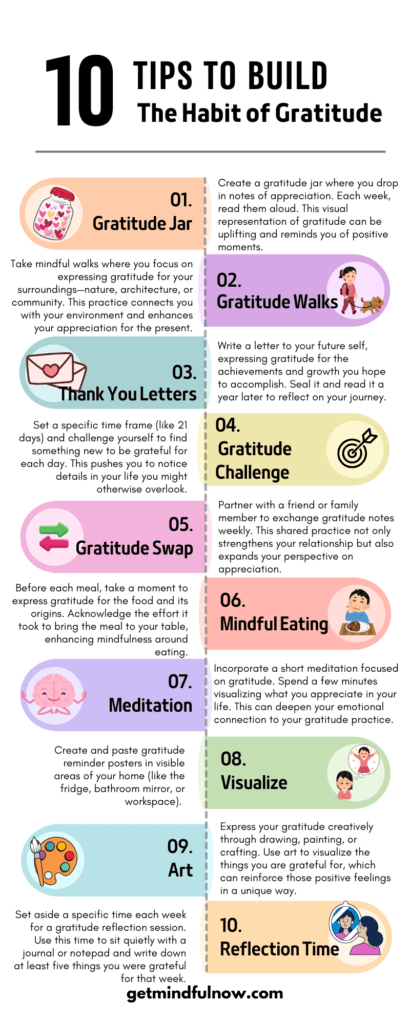
One of the biggest challenges in practicing gratitude is starting and sticking with it. At first, I would go days without thinking about my gratitude list, and then feel like I’d failed. But, by taking a more relaxed approach—writing down just one thing each day—I built a routine that was manageable. Soon, it became a daily anchor for me.
Now, before I go to sleep, I jot down one thing that made me happy or grateful that day. It could be a conversation with a friend, a good meal, or even a peaceful walk. Even on tough days, there’s something I can find, even if it’s just, “I made it through today.” Over time, this practice shifted my perspective. I now find it natural to pause and notice moments of gratitude throughout the day, even in moments I’d normally take for granted.
Now I want to share a meditation practice that I do every other day. This practice enhances my experience of gratitude and helps rewire my brain for appreciation. As a result, when I face difficult times, it doesn’t derail my mental resilience.
Gratitude Meditation with Box Breathing
take a comfortable seat, close your eyes gently, and settle in, letting yourself relax with each breath.
Step 1: Box Breathing to Slow Down
We’ll begin by using a box breathing technique to bring calm and focus to the mind.
- Inhale slowly to a count of four, filling your lungs completely.
- Hold your breath gently for a count of four, feeling still and calm.
- Exhale to a count of four, releasing all tension as you breathe out.
- Hold for another count of four before beginning the next inhale.
Repeat this cycle for a few more rounds. As you breathe, let your mind settle, and feel the air entering and leaving your body, like waves on a calm shore.
Step 2: Shifting Focus to the Heart
Now, gently shift your attention to the area around your heart. Imagine your breath flowing in and out of your heart, soft and steady. With each inhale, feel warmth expanding in your chest. With each exhale, allow that warmth to spread throughout your body.
Begin to feel gratitude for this very moment, for the breath in your lungs, for the stillness around you. Let that feeling of gratitude grow, filling the space around your heart with warmth, calm, and comfort.
Step 3: Practical Gratitude Practice
As you continue to focus on the warmth in your heart, think of one small thing you’re thankful for today. It can be something simple—a smile from a friend, a cozy place to sit, a good meal, or even just this moment to yourself.
As you bring this to mind, let yourself really feel the gratitude. Notice how it feels in your body—maybe a lightness in your chest, a softening of your breath, or a gentle smile.
Take a few more deep breaths, letting this gratitude settle deeply into your heart, anchoring yourself in this feeling.
Closing
When you’re ready, take a final deep breath, and gently open your eyes. Carry this feeling of gratitude with you as you go about your day, knowing it’s always here, ready for you to tap into.
You can use this practice anytime you need a moment to reconnect and find calm, and over time, these small moments of gratitude can build to transform your mindset.
Real-Life Benefits: How Gratitude Has Improved My Well-being
Today, I can honestly say gratitude has changed my life. I notice my stress is lower, and I’m much more present in the moment, enjoying little things I would have missed before. I sleep better, and I feel more optimistic overall. Scientists suggest that these kinds of shifts are linked to real, measurable benefits for mental health, like improved mood and resilience. Dr. Martin Seligman, a psychologist known as the “father of positive psychology,” found in his research that gratitude practices increase feelings of happiness by around 25% over time.

Gratitude also contributes to our ability to attract abundance and prosperity.
Seeing the science and the results in my own life made gratitude feel less like a “should” and more like a powerful tool I could lean on. It’s incredible that a simple shift in perspective—choosing to acknowledge the good—can have such a profound impact.
Why You Should Start Your Gratitude Practice
If you’re feeling skeptical or even just neutral about gratitude, I get it. I was there too. But I’d encourage you to try it, even if it feels awkward or forced at first. Start with one thing each day—write it down or just meditate about it—and see if anything changes. Even the smallest moments of gratitude can have a ripple effect on your health, wealth, and happiness. For me, what started as an experiment turned into a life-changing habit, and I’m so grateful I gave it a chance.
Final Thoughts
Gratitude doesn’t have to be complicated. It can start with noticing something small or thinking about your desired future and then letting yourself feel thankful for it. This practice has shifted my life in ways I didn’t think possible—from rewiring my brain to improving my mental health and giving me a more optimistic view of life. It’s true what they say: gratitude really does have the power to transform your world. Give it a try, and you might just find yourself, like me, realizing that gratitude was the missing piece all along.






Beautifully said focusing on gratitude truly brings more joy and positivity into our lives. Thank you for the reminder to appreciate the small things every day!💝😊
Thank you so much! 😊 I’m glad the post resonated with you. Focusing on those small, grateful moments really does bring so much light into our lives. 💛✨